

How to Get Back Into a Locked Car Safely
- jayasher19
- Jul 4
- 6 min read
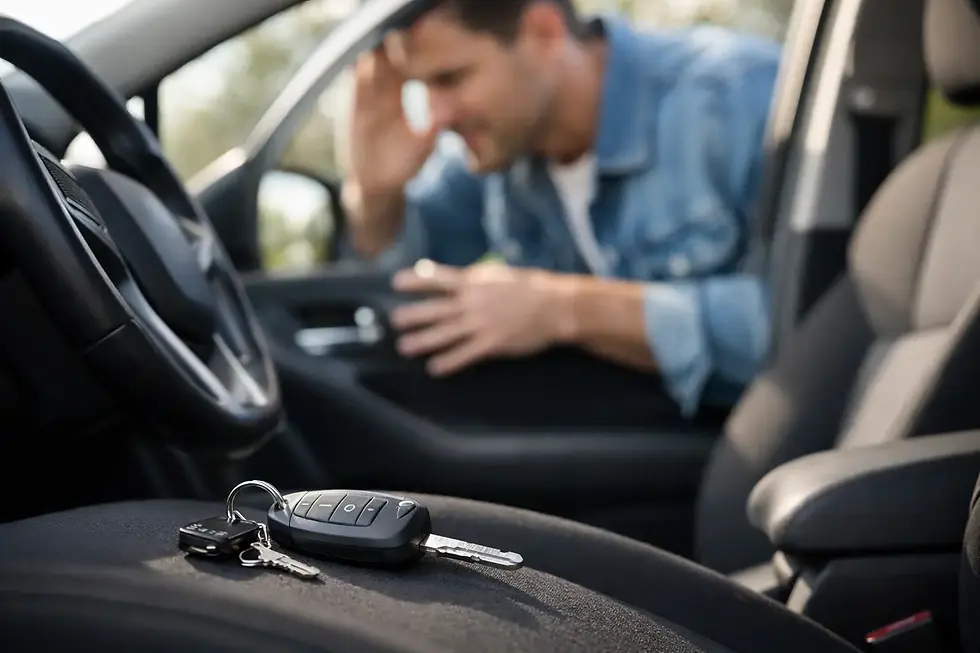
You only need a second of distraction for it to happen. The keys are on the seat, the boot is shut, or the central locking clicks just as the door closes. If you are searching for how to get back into a locked car, the first priority is simple - stay calm and avoid turning a stressful mistake into a damaged vehicle or a security problem.
Car lockouts are common, but the right response depends on the car, the key type, and where the key actually is. A manual lock on an older vehicle is very different from a modern car with deadlocks, keyless entry, or anti-theft programming. What works on one car can damage another, and methods you may have seen online often create more cost than they save.
How to get back into a locked car without making it worse
The safest place to start is with a quick check of the obvious. Try every door, including the passenger side and boot, because one entry point may still be open. If the car has been double locked, no handle or interior release is likely to help, even if a window is slightly open. If the key is visible inside, resist the urge to force something through the seal or wedge the door wide open. That is where bent frames, torn weather strips, scratched paint, and damaged airbags often begin.
If you have a spare key nearby, that is usually the cleanest solution. For some drivers, that means calling home. For others, especially if they are at work, on a school run, or parked away from home in Hull or the wider East Riding, waiting for a spare can take longer than calling a mobile auto locksmith.
It is also worth checking whether your key fob battery has failed rather than the car being fully locked out. Sometimes the vehicle will still open with the physical emergency key hidden inside the fob. Not every driver realises that many modern remotes contain one. The exact release differs by manufacturer, so use care rather than forcing the casing apart.
When DIY methods are a bad idea
There is a big difference between getting into an old runabout with a simple latch and trying to access a modern vehicle with shielded locks and electronic security. Home-made methods using coat hangers, rods, strings, screwdrivers, or inflatable wedges are widely suggested online, but the risk is usually higher than people expect.
On newer cars, these attempts often fail because the locking system is designed to prevent exactly that kind of entry. On older cars, they can still snap clips, damage trim, scratch glass, or bend the top of the door just enough to create wind noise and water leaks later. That turns a lockout into a bodywork and sealing repair.
There is also the issue of side curtain airbags, wiring, and sensitive internal components around the door frame. Pushing tools blindly into the gap is not a controlled method. If your vehicle has deadlocks, keyless ignition, or a high-security key system, forcing access is rarely worth the gamble.
If a child, vulnerable person, or pet is locked inside and there is immediate danger, call the emergency services. That is not a routine lockout. Heat, distress, and medical risk change the situation entirely, and speed matters more than preserving the lock mechanism.
What a vehicle locksmith will do differently
A specialist auto locksmith approaches the job as a vehicle access problem, not just a locked door. The goal is non-destructive entry wherever possible. That means identifying the make, model, lock type, and likely security features before choosing the right method.
For some vehicles, the best route is controlled access using specialist tools that allow the locksmith to manipulate the locking mechanism without harming the door or glass. For others, the issue is not entry alone but the key itself - lost, broken, unresponsive, or stolen. In those cases, regaining access may be only the first step.
A properly equipped automotive locksmith can often cut and programme a replacement key on site. That matters if your only key is missing or if the remote has failed completely. For some modern vehicles, a missing or stolen key can also be disabled from the vehicle system so it no longer presents the same security risk. A dealership may eventually offer the same end result, but usually with more delay, more inconvenience, and often the need to recover or tow the car first.
How to get back into a locked car if the keys are in the boot
This is one of the more frustrating versions of a lockout because drivers often assume the key is inside the vehicle cabin when it is actually shut in the boot. Depending on the car, the boot may be fully integrated into the central locking system or it may have a separate release strategy.
If the cabin is open, check whether the boot release works from inside. If the whole vehicle is locked and the keys are in the boot, the answer depends heavily on the vehicle design. Some cars will not let the boot be opened independently once deadlocked. Others may have anti-lockout features that failed, or were bypassed because the key battery was low or the key was placed in a certain area.
This is another situation where guessing can waste time. A locksmith will usually identify quickly whether there is a safe access route or whether a replacement key is the more efficient answer.
Lost keys, broken keys, and stolen keys are different problems
Drivers often use the word lockout for several different issues, but the solution changes depending on what has actually happened. If the keys are clearly visible inside the car, access is the main task. If the key is lost somewhere outside, access may still be needed, but you may also need a new key cut and programmed. If the key has snapped in the lock or ignition, extraction and replacement become part of the job.
Stolen keys need a more security-focused response. Getting back into the car is only one concern. You also need to think about preventing the missing key from being used again. On many modern cars, this can be handled by programming the vehicle so the missing key no longer works.
That is why a proper diagnosis at the start saves time. It prevents the driver from paying twice - once to get into the car and again to deal with the actual key issue.
Why modern cars make lockouts more complicated
Many people are surprised that cars are harder to access now even when the key is only a few inches away on the seat. Modern vehicle security is designed to resist theft, and that affects legitimate lockout situations too.
Keyless systems, transponders, immobilisers, deadlocks, and encrypted remotes all add layers of protection. From a security point of view, that is a good thing. From a stranded driver's point of view, it means there is less room for improvised fixes. Even when the door is opened, the car may still not start without a correctly programmed key.
That is also why a general locksmith is not always enough. Vehicle access and vehicle key programming are specialist work. A locksmith who deals specifically with cars will usually have model-specific knowledge and the right equipment for both entry and replacement.
What to do while you wait for help
If you are stuck outside your car, think about safety first. Move to a secure place if you are on a busy road, in a poorly lit area, or parked somewhere awkward. Keep your phone charged if possible, and have your vehicle registration and location ready. If you are in a supermarket car park, outside your workplace, or near a landmark, mention that clearly when you call.
It also helps to tell the locksmith exactly what happened. Are the keys on the seat, in the ignition, in the boot, lost entirely, or stolen? Is the car double locked? Do you have a spare? Has the key fob stopped responding? Those details shape the fastest solution.
For drivers in Hull and surrounding areas, a local mobile specialist such as DASH Auto Locksmith can usually save a lot of time compared with arranging recovery or waiting on a dealer process. More importantly, you get help where the car is, whether that is at home, at work, roadside, or in a car park.
The best next step is usually the safest one, not the quickest-looking one. If access can be gained without damage, that is almost always worth more than a risky DIY attempt that leaves you with a repair bill after the door is finally open.


Comments